
What Causes Dark Spots on the Face? 10 Common Reasons Explained
FATIO Guide™
What Causes Dark Spots on the Face? 10 Common Reasons Explained
Understanding Why They Appear—and How Thoughtful Skincare Can Support Healthier-Looking Skin
⏱ Approx. 8–10 minutes read
📖 Inside This FATIO Guide™
Understanding the cause of a dark spot is often the first step toward making better skincare decisions. In this guide, we'll explore the most common reasons dark spots appear, explain the science behind skin pigmentation in clear language, and share practical habits that support healthier-looking skin.
Your Reading Journey
- Every Dark Spot Has Its Own Story — Why understanding the cause matters before choosing skincare.
- Understanding Melanin: Your Skin's Natural Protection — How your skin naturally produces pigment and why melanin plays an important protective role.
- 10 Common Reasons Dark Spots Appear — Explore the most common everyday causes, from sun exposure to lifestyle habits.
- Why the UAE Climate Deserves Special Attention — How year-round sunshine and environmental conditions can influence skin pigmentation.
- Ingredients Commonly Used in Skincare for Uneven-Looking Skin — Learn about botanical ingredients and cosmetic actives frequently used in skincare formulations.
- Choosing Skincare with Confidence — Practical guidance on selecting products based on thoughtful formulation rather than marketing claims.
- The FATIO Perspective — Discover why we believe education should always come before products.
- Key Takeaways — A concise summary of the guide's most important insights.
- Frequently Asked Questions — Clear answers to common questions about dark spots, pigmentation, and skincare.
- Continue Your Learning — Explore related FATIO Guides™ to deepen your understanding and build a consistent skincare routine.
Our Promise to You
At FATIO, we believe the best skincare decisions begin with understanding, not marketing. This guide has been carefully written to explain the most common reasons dark spots appear on the face using balanced, easy-to-understand information.
Our goal is to help you make informed skincare choices with confidence.
Every Dark Spot Has Its Own Story

Not every dark spot appears for the same reason.
Some develop gradually after years of enjoying the sunshine. Others remain after a blemish has healed. Some become more noticeable with age, while others are influenced by hormones, lifestyle, or everyday environmental exposure.
Although they may look similar in the mirror, dark spots can have very different causes. Understanding those causes is one of the most important steps in choosing an appropriate skincare routine and setting realistic expectations.
Healthy-looking skin is rarely achieved through quick solutions. It is built through consistent care, thoughtful ingredients, and patience.
Let's begin by understanding why dark spots develop in the first place.
Understanding Melanin: Your Skin's Natural Protection
Your skin naturally produces a pigment called melanin. Melanin gives colour to the skin, hair, and eyes while helping protect the skin from ultraviolet (UV) radiation.
When the skin is exposed to certain triggers, it may produce more melanin in specific areas. As a result, some parts of the skin become darker than the surrounding complexion.
This is why many pigmentation concerns appear as flat brown or darker patches rather than raised bumps.
Melanin itself is not the problem, it is part of your skin's natural defence system. The goal of skincare is not to remove melanin, but to help support a more even-looking complexion while protecting the skin from further environmental stress.
10 Common Reasons Dark Spots Appear

Understanding why dark spots appear is the first step toward making informed skincare choices. Below are the ten most common reasons pigmentation develops on the face.
1. Daily Sun Exposure
Sun exposure is one of the most common reasons dark spots become more noticeable.
Even short periods outdoors add up over months and years. UV radiation encourages the skin to produce additional melanin as a natural protective response.
Daily use of a broad-spectrum sunscreen, together with protective habits such as seeking shade and wearing a hat when appropriate, can help support healthy-looking skin.
2. Post-Blemish Marks
After a blemish or skin irritation has healed, some people notice a darker area remaining.
This is often the skin's natural response to inflammation. While these marks may gradually become less visible over time, a gentle skincare routine and patience are important.
Avoid picking or squeezing blemishes, as this can increase irritation and make marks more noticeable.
3. Hormonal Changes
Hormonal changes can influence the appearance of pigmentation in some individuals.
These changes may occur during different stages of life. If you notice sudden or widespread pigmentation, or if you have concerns about changes in your skin, it is appropriate to seek advice from a qualified healthcare professional for an assessment.
4. Natural Ageing
As we grow older, the skin's renewal process gradually slows.
Years of cumulative sun exposure and environmental factors may become more visible, contributing to the appearance of age-related pigmentation.
Ageing is a natural process, and healthy skincare focuses on supporting the skin rather than trying to achieve unrealistic perfection.
5. Environmental Stressors
Pollution, heat, and other environmental factors can affect how the skin looks and feels.
While they may not be the sole cause of pigmentation, protecting the skin from everyday environmental stress supports overall skin health and helps maintain a brighter-looking complexion.
6. Repeated Skin Irritation
Using products that are too harsh or over-exfoliating the skin can compromise the skin barrier.
When the skin becomes irritated, some individuals may notice uneven-looking pigmentation as part of the skin's natural response.
A balanced routine is often more effective than using many active products at once.
7. Inconsistent Sun Protection
Many people apply sunscreen only during holidays or beach visits.
In reality, everyday exposure while driving, walking, or sitting near windows can contribute to cumulative UV exposure.
Making sunscreen part of your daily routine is one of the simplest habits that supports healthier-looking skin.
8. Lifestyle Habits
Sleep quality, stress management, hydration, and overall wellness all influence the appearance of the skin.
While lifestyle alone does not determine whether dark spots develop, healthy daily habits contribute to a stronger skin barrier and overall skin comfort.
9. Genetics
Some people are naturally more likely to develop pigmentation than others.
Your skin type, genetic background, and natural melanin levels all influence how your skin responds to sunlight and inflammation.
Understanding your skin's characteristics helps you choose a routine that works with your skin rather than against it.
10. Skipping a Consistent Skincare Routine
Perhaps the most common mistake is expecting results without consistency.
Changing products frequently or using them only occasionally makes it difficult to evaluate how your skin responds.
Healthy-looking skin is usually supported by simple routines followed consistently over time.
Why the UAE Climate Deserves Special Attention
Living in the UAE presents unique skincare challenges.
Strong sunlight throughout much of the year, outdoor heat, and frequent movement between air-conditioned indoor spaces and hot outdoor environments can influence skin comfort and the visibility of pigmentation concerns.
This does not mean you cannot enjoy the outdoors. It simply means that thoughtful daily skincare, moisturising, and broad-spectrum sun protection become especially valuable habits.
Ingredients Commonly Used in Skincare for Uneven-Looking Skin
When choosing skincare, focus on well-formulated products rather than long ingredient lists. Some ingredients commonly found in cosmetic formulations designed for uneven-looking skin include:
🫒 Olive Oil (Olea Europaea Fruit Oil)
Helps nourish, moisturise, and support the skin's natural protective barrier.
🌿 White Mulberry Bark Extract (Morus Alba Bark Extract)
Traditionally used in skincare products formulated for brighter-looking skin.
✨ Diacetyl Boldine
A cosmetic ingredient commonly used in formulations targeting the appearance of dark spots and uneven skin tone.
🌱 Parsley Extract (Petroselinum Crispum Extract)
Rich in naturally occurring antioxidants that help support a fresh, healthy-looking complexion.
🌸 Linden Extract (Tilia Cordata Extract)
Helps comfort and condition the skin while promoting softness.
The effectiveness of a skincare product depends on the complete formulation and regular use—not on one ingredient alone.
Choosing Skincare with Confidence

The best skincare products are not necessarily the ones making the boldest promises.
The best skincare products are not necessarily the ones making the boldest promises.
Instead, consider asking:
- Does the formula contain thoughtfully selected ingredients?
- Does the brand explain how the product should be used?
- Are the claims balanced and realistic?
- Is the product suitable for daily use?
- Does it fit into a simple, consistent routine?
Thoughtful questions often lead to better long-term skincare decisions.
The FATIO Perspective
At FATIO, we believe skincare should begin with education.
Rather than offering countless products for the same concern, we carefully evaluate formulations, ingredient quality, manufacturing standards, and everyday usability before introducing products to our customers.
This philosophy guided our decision to include Benostan Clear Skin Cream in our curated collection. Its balanced formulation combines botanical ingredients with modern cosmetic science, reflecting our belief that skincare should support healthy-looking skin through thoughtful formulation and consistent daily care, not unrealistic promises.
Key Takeaways
- Dark spots can develop for many different reasons, including sun exposure, post-blemish marks, ageing, hormones, and everyday environmental factors.
- Melanin is a natural part of the skin's protective system.
- Consistency is often more important than complexity when building a skincare routine.
- Daily sun protection plays an important role in supporting healthy-looking skin.
- Well-formulated skincare products and realistic expectations are essential for long-term skin care.
Frequently Asked Questions
Are all dark spots the same?
No. Dark spots can develop for different reasons, including sun exposure, post-inflammatory marks, ageing, and hormonal influences. Understanding the cause helps you choose an appropriate skincare routine.
Can dark spots disappear immediately?
Cosmetic skincare works gradually. Improvements in the appearance of dark spots typically require consistency and patience, and results vary from person to person.
Should I use several products at once?
Introducing multiple new products at the same time can make it difficult to understand how your skin responds. A simple, consistent routine is often easier to follow and evaluate.
When should I seek professional advice?
If you notice sudden changes in pigmentation, rapidly changing spots, or have concerns about your skin, it is advisable to consult a qualified dermatologist or healthcare professional for an evaluation.
Continue Your Learning
If you'd like to explore this topic further, continue with our pillar guide:
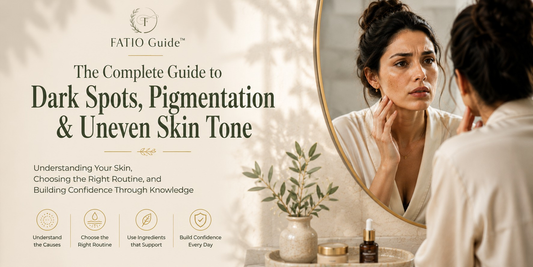
The Complete Guide to Dark Spots, Pigmentation & Uneven Skin Tone
It explains how pigmentation develops, the role of skincare ingredients, practical daily routines, and how to build healthy skincare habits with confidence.
Tags:
Related articles

Custom Branded Eco Bags for Corporate Events, Exhibitions & Businesses in UAE
Post Date:
Jun 05, 2026


A Bag That Keeps Giving: 10 Beautiful Ways to Reuse Eco-Friendly Bags at Home
Post Date:
May 25, 2026
The UAE Men’s Grooming Standard: Why Modern Men Are Choosing Clean, Simpler Care
Post Date:
May 20, 2026