
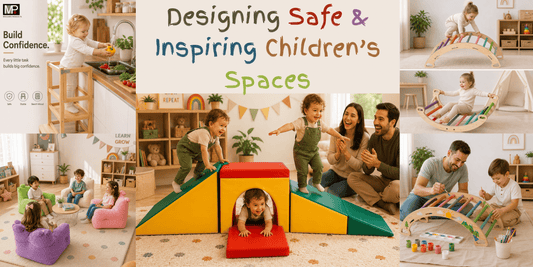
Designing Safe & Inspiring Children's Spaces
Designing Safe & Inspiring Children's Spaces
A Complete Guide to Premium Custom Furniture & Soft Play in the UAE
Part 1
Table of Contents
Every Great Childhood Begins with a Thoughtfully Designed Space

There is something remarkable about watching a child enter a room designed especially for them.
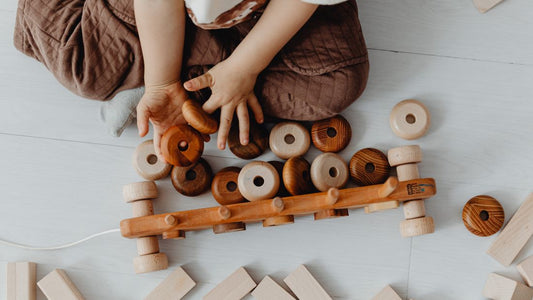
Without instructions, they begin exploring. Tiny hands reach for smooth wooden surfaces. Curious eyes discover colors, textures, and shapes. Small feet climb carefully, balance confidently, and soon, what began as cautious movement becomes joyful laughter.
Children rarely see furniture the way adults do.
A chair becomes a mountain.
A rocker becomes a boat crossing an imaginary sea.
A set of soft play blocks transforms into a castle, a tunnel, or an exciting obstacle course waiting to be conquered.
To adults, these are carefully crafted pieces of furniture.
To children, they are the beginning of imagination.
This is why designing children's environments has become far more important than simply filling a room with attractive furniture. Every carefully chosen material, every rounded corner, every gentle curve, and every thoughtfully designed play element contributes to something much larger than appearance, it shapes the way children move, learn, discover, and grow.
Whether creating a warm playroom at home, designing a modern nursery, furnishing a preschool classroom, planning a pediatric clinic, or developing a children's area within a hotel or commercial space, the environment itself quietly becomes a teacher.
Long before a child learns to read or write, they learn by touching.
By climbing.
By balancing.
By experimenting.
By falling safely.
By trying again.
That simple process of exploration lays the foundation for confidence, independence, creativity, and lifelong curiosity.
Today's parents, educators, architects, and interior designers understand this more than ever before. Rather than filling children's spaces with disposable products that quickly wear out, they are choosing thoughtfully designed environments built with premium materials, lasting durability, and child development in mind.
Because childhood deserves more than decoration.
It deserves purposeful design.
Why Children's Spaces Matter More Than Ever
Modern childhood has changed dramatically over the past decade.
Technology has become an important part of everyday life, bringing countless opportunities for learning and connection. Yet alongside these benefits comes a growing need to create physical environments that encourage movement, creativity, social interaction, and independent exploration.
Children naturally learn through experience.
They develop balance by climbing.
They strengthen muscles through movement.
They improve coordination by experimenting with different positions and challenges.
They build confidence every time they solve a small problem on their own.
A thoughtfully designed play environment encourages all of these experiences naturally.
Unlike structured lessons, children rarely feel that they are "learning" while they play.
Instead, learning becomes something joyful.
Something instinctive.
Something they eagerly repeat.
Educational researchers have long recognized that open-ended play supports cognitive development, problem-solving abilities, language skills, emotional regulation, and social confidence. Environments that invite exploration allow children to make choices independently, helping them develop resilience and creativity from an early age.
This philosophy has inspired educational approaches around the world, particularly Montessori and child-centered learning environments, where furniture is intentionally designed around children's size, independence, and natural curiosity.
Rather than limiting imagination, the environment encourages it.
Every object has purpose.
Every movement has value.
Every experience becomes an opportunity for growth.
Whether in homes or educational settings, beautifully designed children's spaces are no longer considered a luxury.
They have become an investment in healthy development.
The Foundation of Quality: Why Materials Matter More Than Appearance

Beautiful design immediately captures attention.
Exceptional materials earn lasting trust.
While colorful furniture may appear attractive at first glance, the true value of children's furniture lies beneath its surface, in the materials chosen during manufacturing and the care invested in every detail.
Children interact with furniture differently than adults.
They climb.
Jump.
Pull.
Lean.
Crawl underneath.
Balance on top.
Use it every single day.
That level of daily activity demands materials capable of maintaining both their appearance and structural integrity over many years.
This is why premium children's furniture begins with thoughtful material selection rather than decoration alone.
High-Density Foam
In quality soft play equipment, foam serves a much greater purpose than comfort.
High-density foam provides consistent support while remaining soft enough to reduce impact during active play.
Whether children are climbing, crawling, rolling, or building imaginative obstacle courses, properly engineered foam helps create an environment where movement feels both exciting and secure.
Unlike lower-density alternatives that quickly lose shape after repeated use, premium foam maintains its structure, allowing furniture to perform reliably throughout years of daily activity.
For schools, nurseries, hotels, and commercial play spaces, durability is not simply an advantage.
It is essential.
Premium PU Leather
The outer covering of soft play equipment experiences constant interaction.
Hands.
Shoes.
Cleaning products.
Daily use.
Premium PU leather has become a preferred material because it combines durability with practicality.
Its smooth surface allows easy cleaning, helping maintain hygiene in environments where children play every day.
It also resists everyday wear while providing a soft, welcoming texture that feels pleasant to touch.
Equally important, premium finishes retain their elegant appearance over time, allowing educational environments to remain professional, inviting, and visually consistent.
Natural Wood That Ages Beautifully
Wood has always carried a timeless quality.
Its warmth cannot be replicated by plastic.
Its natural grain brings character to every piece.
Its strength allows furniture to remain part of childhood memories for years.
Premium birch and beech wood are especially valued for children's furniture because of their durability, smooth finish, and refined appearance.
Rounded edges reduce sharp corners while showcasing careful craftsmanship.
Smooth sanding creates surfaces that invite little hands to explore safely.
Child-safe finishes preserve the wood's natural beauty while protecting it from everyday use.
Rather than feeling manufactured, natural wood introduces warmth into every room.
Whether placed inside a Montessori classroom, a contemporary nursery, or a beautifully designed family home, wooden furniture creates an atmosphere of calm that never goes out of style.
Children may never notice the craftsmanship behind each curve.
Parents always do.
More Than Furniture, Designing Spaces That Inspire Learning

Imagine walking into two different children's rooms.
The first is filled with toys.
The second is filled with opportunities.
The difference is subtle, but profound.
In one room, objects simply occupy space.
In the other, every piece invites movement, imagination, independence, and discovery.
A wooden rocker becomes an adventure across imaginary oceans.
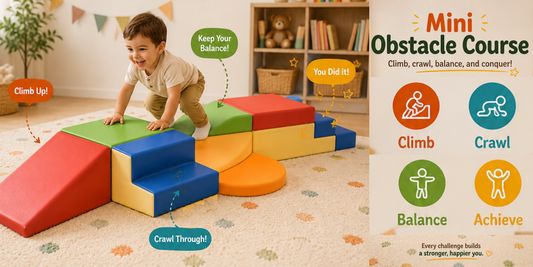
A collection of soft play blocks transforms into castles, bridges, tunnels, and obstacle courses.
A simple wooden stool empowers a child to reach a bookshelf independently or sit comfortably while drawing their next masterpiece.
Great children's furniture never tells a child how to play.
Instead, it quietly asks a question:
“What would you like to imagine today?”
That single difference changes everything.
The most memorable children's environments are rarely the most complicated.
They are simply the most thoughtful.
Thoughtful in their layout.
Thoughtful in their materials.
Thoughtful in their safety.
And most importantly, thoughtful in how they encourage children to become active participants in their own learning journey.
Because every confident step begins somewhere.
Sometimes, it begins with a beautifully crafted piece of furniture waiting patiently for the next little explorer.
Tags:
Previous
World Environment Day The Future We Leave in Small Hands
Next
Designing Safe & Inspiring Children’s Spaces – Part 2
Related articles




Back to School and Beyond: Choosing the Perfect Laptop Bag for Every Journey
Post Date:
Aug 28, 2025